
What Is NLP?
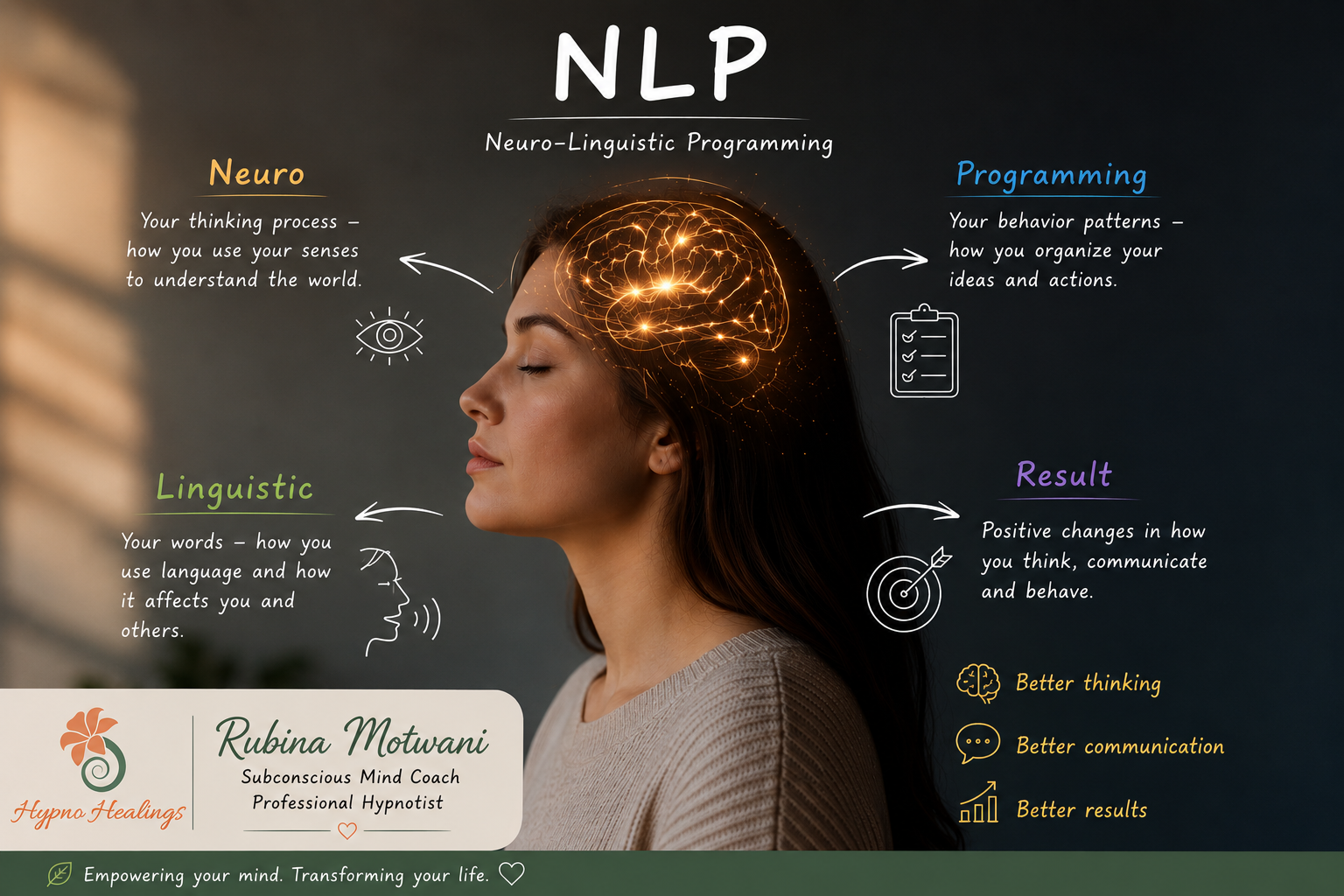
Understanding Neuro-Linguistic Programming in Simple Terms
Have you ever wondered why some thoughts, habits, or emotional reactions seem to happen automatically?
Maybe you:
overthink situations
feel nervous in certain environments
repeat unhealthy habits
doubt yourself even when you’re capable
Many of these reactions come from patterns your mind has learned over time.
And this is where NLP can help.
What Does NLP Stand For?
NLP stands for Neuro-Linguistic Programming.
That may sound complicated at first, but the idea behind it is actually very simple.
It’s a way of understanding:
how your mind works
how your thoughts affect your feelings
and how certain patterns can be changed
Breaking It Down in Simple Words
Neuro = Your Mind & Thoughts
This refers to how your brain processes experiences, emotions, and memories.
Linguistic = Your Language
This includes:
the words you say out loud
the way you talk to yourself internally
and the meaning you give to situations
Programming = Your Patterns
Over time, your mind creates patterns based on repeated experiences.
These patterns can become automatic.
Like:
reacting with anxiety
avoiding situations
emotional eating
negative self-talk
feeling “stuck”
NLP helps you gently change these patterns.
A Simple Way to Understand NLP
Think of your mind like a computer.
Over the years, certain “programs” may have been installed:
fear
self-doubt
stress responses
limiting beliefs
NLP works like an update to those programs.
Not because something is wrong with you, but because your mind learned certain responses that no longer serve you.
And the good news is: patterns can be changed.
Real-Life Examples of NLP
Example 1: Fear of Public Speaking
Someone may feel anxious every time they speak in front of people.
Their mind might automatically create thoughts like: “I’ll embarrass myself” or “People are judging me”
NLP techniques can help change:
the mental image
the emotional reaction
and the inner dialogue
So instead of fear, the person begins to feel calmer and more confident.
Example 2: Overthinking & Anxiety
Sometimes the mind keeps replaying worst-case scenarios.
NLP helps interrupt those repetitive thought loops and teaches the mind new ways of responding.
Instead of: panic, over-analysis or mental spiraling
The mind learns: calm, clarity and emotional balance
Example 3: Breaking Habits
Whether it’s:
emotional eating
nail biting
procrastination
smoking
self-sabotage
NLP helps identify the subconscious pattern behind the habit and create healthier responses instead.
Common Areas NLP Can Help With
People often use NLP for:
stress and anxiety
confidence building
fears and phobias
emotional healing
communication skills
motivation
habit change
mindset shifts
self-esteem
performance improvement
How NLP Connects With Hypnosis
NLP and hypnosis work beautifully together because both work with the subconscious mind.
Your subconscious mind stores:
habits
emotional responses
beliefs
learned patterns
Hypnosis helps the mind become more open and focused.
NLP techniques can then help reshape the patterns stored underneath.
Together, they can help create deeper and faster change.
Some NLP Techniques Used in Hypnosis
Here are a few simple examples:
Reframing
Changing the meaning the mind gives to an experience.
Example: Instead of seeing a mistake as failure,
you begin seeing it as learning and growth.
Visualization
Using the imagination to create new emotional experiences and positive outcomes.
Anchoring
Creating a mental connection between a positive feeling and a physical action.
For example: touching two fingers (index finger and thumb) together while feeling calm and confident, so the body learns to reconnect with that feeling later.
Pattern Interruption
Breaking automatic emotional or behavioral loops before they fully take over.
The Beautiful Thing About NLP
NLP is not about becoming someone different.
It’s about:
- understanding yourself better
- changing unhelpful patterns
- and reconnecting with your inner strengths
Because many times, the problem isn’t who you are. It’s simply the pattern your mind learned.
And patterns can change!
Final Thought
Your mind is powerful.
The way you think, speak to yourself, and respond emotionally shapes your daily experience.
NLP offers gentle tools to help you:
- shift your mindset
- create healthier patterns
- and feel more empowered within yourself
Small inner shifts can create powerful changes in everyday life.
Gentle Invitation
At Hypno Healings, Rubina integrates hypnosis, NLP, EFT, and mind-body techniques to help clients gently release limiting patterns and create positive inner change.
Whether you’re struggling with stress, self-doubt, habits, or emotional overwhelm, healing and transformation are possible!
Book a complimentary call with Rubina to learn more by clicking here: Hypno Healings